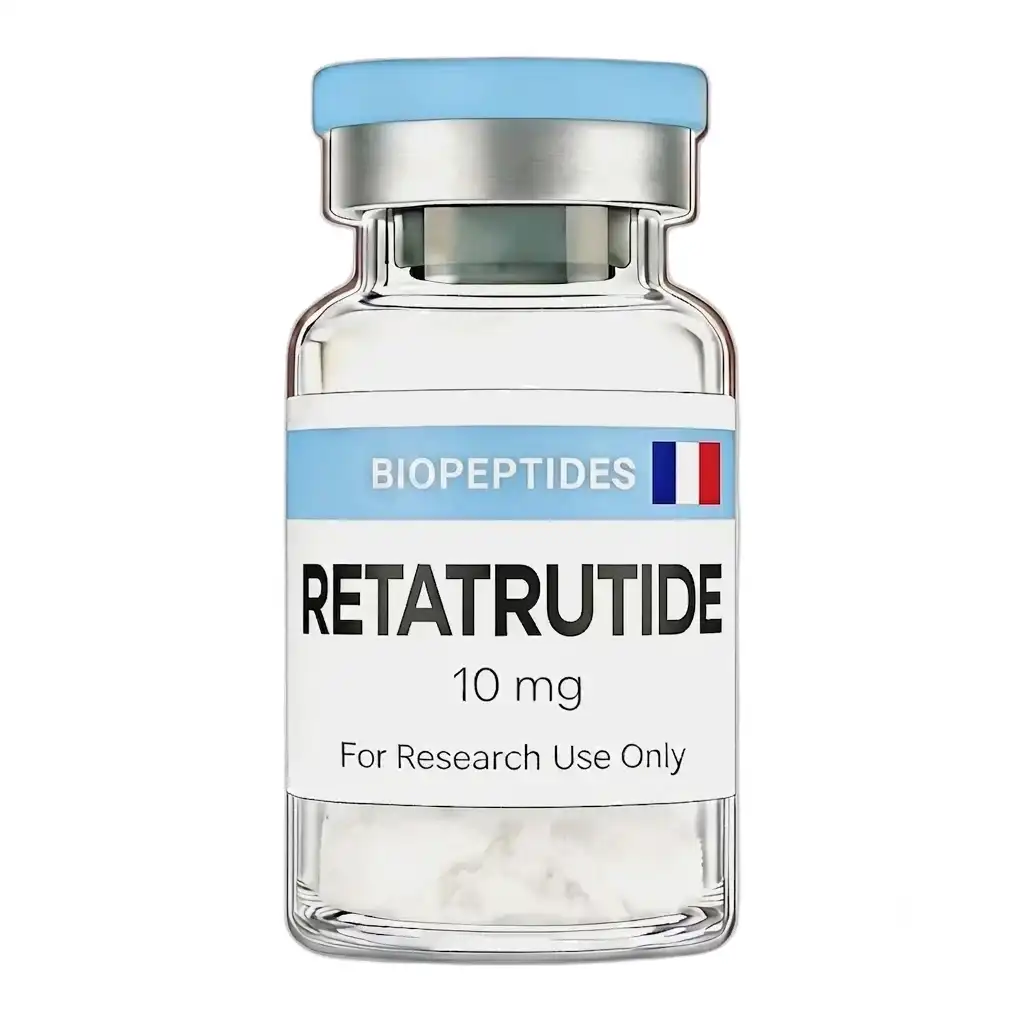
Retatrutide
Metabolic research peptide (LY-3437943) studied in a preclinical context.
9 people are viewing this product right now
Retatrutide
10 mg · 94,00 €
Description
Retatrutide (LY-3437943) is a synthetic peptide studied in the research literature for its agonist profile on several metabolic receptors (GLP-1, GIP, glucagon). It is used as a research reagent in the laboratory for the study of metabolic pathways. Supplied lyophilised with an independent certificate of analysis. Intended exclusively for in vitro scientific research — not for human consumption, diagnosis or treatment of any disease.
Key points from the literature
- Latest-generation peptide studied in metabolic research
- Triple-agonist profile (GLP-1 / GIP / glucagon) documented in vitro
- Acylated structure — good solubility in aqueous solution
- Certificate of analysis (HPLC + MS) included with every batch
Research peptides — Research Use Only
- Not for human consumption
- Not for the diagnosis, treatment or prevention of any disease
Why this research peptide
Documented triple-agonism
The only research peptide studied in vitro for its simultaneous action on the GLP-1, GIP and glucagon receptors.
Solid scientific corpus
Works indexed on PubMed (NEJM, Cell Metabolism, The Lancet) covering metabolic pathways.
Excellent solubility
Acylated structure allowing clean dissolution in aqueous media, ideal for in vitro protocols.
Verified purity
HPLC + mass spectrometry analysis by an independent laboratory, certificate included with every batch.
Lyophilised stability
Lyophilised form stable for up to 18 months at -20°C, for long-term storage in the laboratory.
Discreet logistics
Plain parcel, France delivery 3-5 days, tracking included and neutral packaging.
What is Retatrutide?
Retatrutide (LY-3437943) is a synthetic peptide developed in the context of metabolic research. Its distinctive feature, studied in the literature, is acting as an agonist of three metabolic receptors at once — GLP-1, GIP and glucagon — whereas most related peptides target only one or two. It is used in the laboratory as a reagent for studying metabolic pathways in vitro and in preclinical models. Lyophilised product supplied with an independent certificate of analysis, intended exclusively for scientific research — not for human consumption.
Mechanism studied in research
Publications describe a triple-agonist profile. The items below summarise the mechanism as observed in in vitro research models — for informational purposes only, with no intent of human use.
GLP-1 receptor
The most studied pathway of metabolic peptides, involved in the regulation of insulin signalling in laboratory models.
GIP receptor
Acts in synergy with the GLP-1 pathway in metabolic research models.
Glucagon receptor
Retatrutide's specificity: the addition of this pathway is the subject of in vitro studies on cellular energy metabolism.
Laboratory reconstitution
Usual reconstitution concentrations for laboratory handling (bacteriostatic water, 0.9% benzyl alcohol). These values relate solely to the preparation of the research solution — they constitute neither a dosage nor a protocol for human use.
| Vial | Solvent volume | Resulting concentration |
|---|---|---|
| 10 mg | 2 mL | 5 mg/mL |
| 20 mg | 2 mL | 10 mg/mL |
| 30 mg | 3 mL | 10 mg/mL |
Who is this product intended for?
This product is a reagent reserved exclusively for research professionals and institutions, for in vitro use in the laboratory. It is not intended for the general public, nor for human consumption, nor for the diagnosis, treatment or prevention of any disease. No human dosage information is provided: any question relating to human use must be addressed to a qualified healthcare professional.
Published research data
The works below, indexed on PubMed, document the pharmacology of Retatrutide. They are cited as scientific context and do not constitute a product claim.
- 1
Cell Metabolism (2022) — PMID 35421379
Fundamental pharmacology of the GIP / GLP-1 / glucagon triple-agonism specific to Retatrutide.
- 2
New England Journal of Medicine (2023) — PMID 37366315
Phase 2 study on the compound's metabolic profile.
- 3
The Lancet (2023) — PMID 37385275
Phase 2 efficacy data on metabolic markers.
Storage & handling
Product intended exclusively for scientific research in the laboratory. Keep in its original packaging until use.
Questions about this product
Who is this product intended for?
Is the product intended for human consumption?
How are batches verified?
What are the delivery times?
What payment methods are accepted?
How should a lyophilised peptide be stored?
Is the certificate of analysis provided?
Customer reviews
3 verified reviews
Mathieu D. Verified purchase
March 14, 2026
Received in 5 days, really discreet packaging. The CoA was included in the parcel. Perfect lyophilised powder, clean dissolution in bacteriostatic water.
Caroline V. Verified purchase
February 28, 2026
Ordered for a research protocol. Serious packaging, hermetic vial, purity visible on the certificate. Very responsive support.
Adrien L. Verified purchase
January 19, 2026
Delivery on time, 4 days to Lyon. The 20 mg vial is more cost-effective. Quick support when I had a question.
Related products
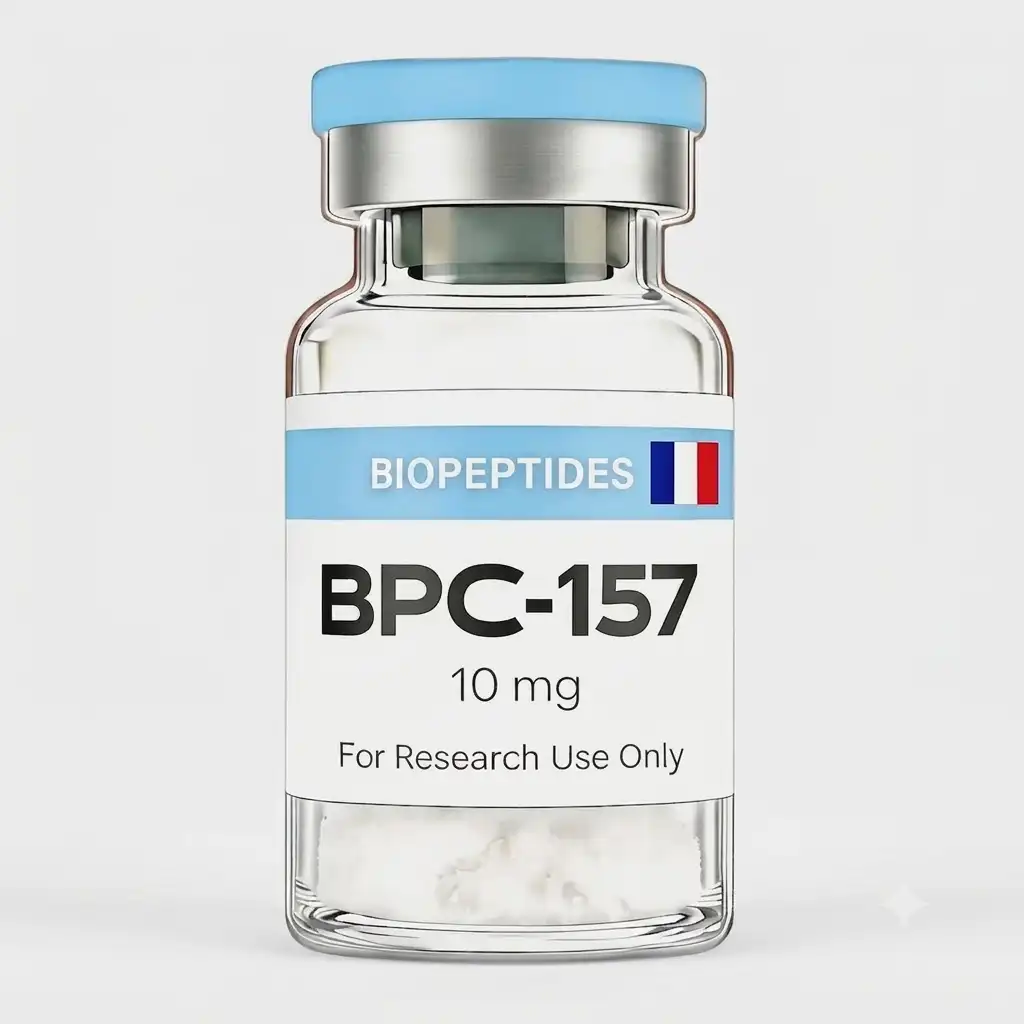
BPC-157
Peptide studied in preclinical research on tissue repair.
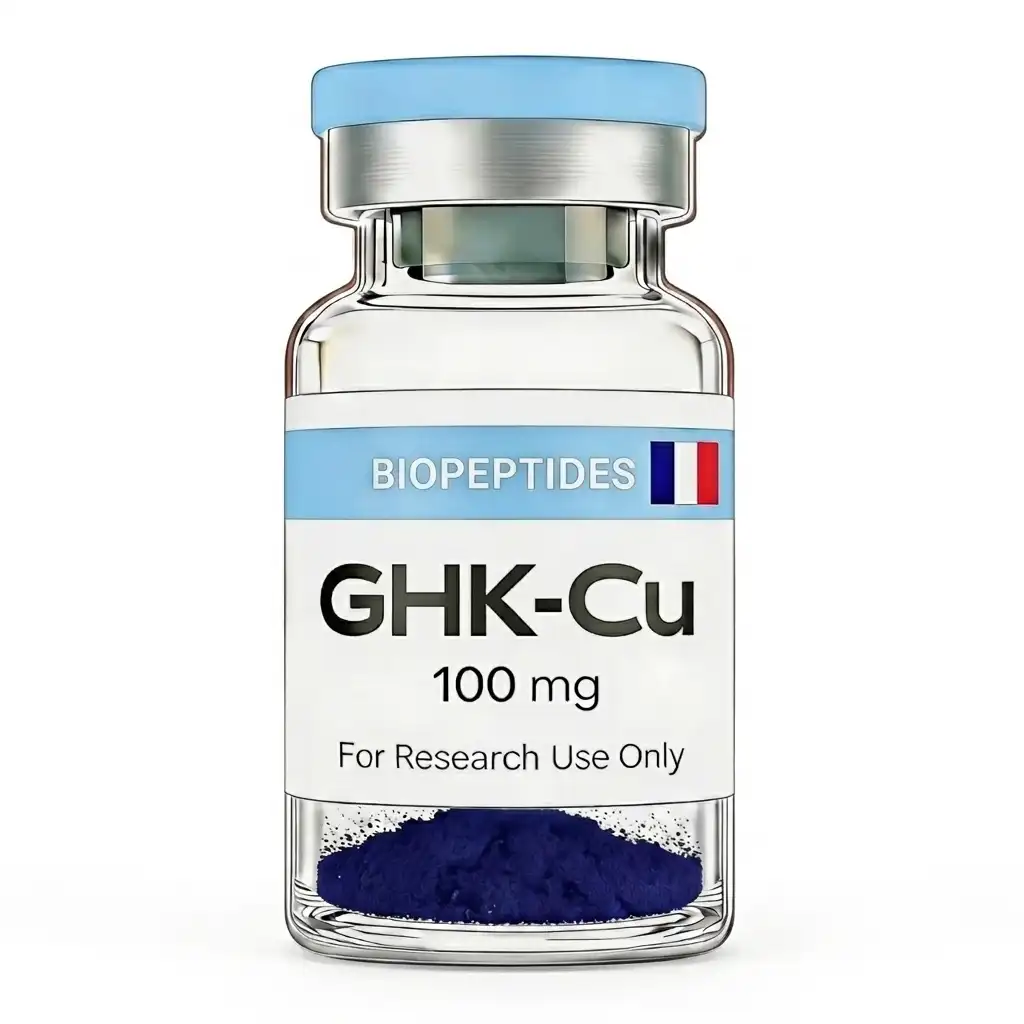
GHK-Cu
Copper tripeptide studied in in vitro dermatological research.
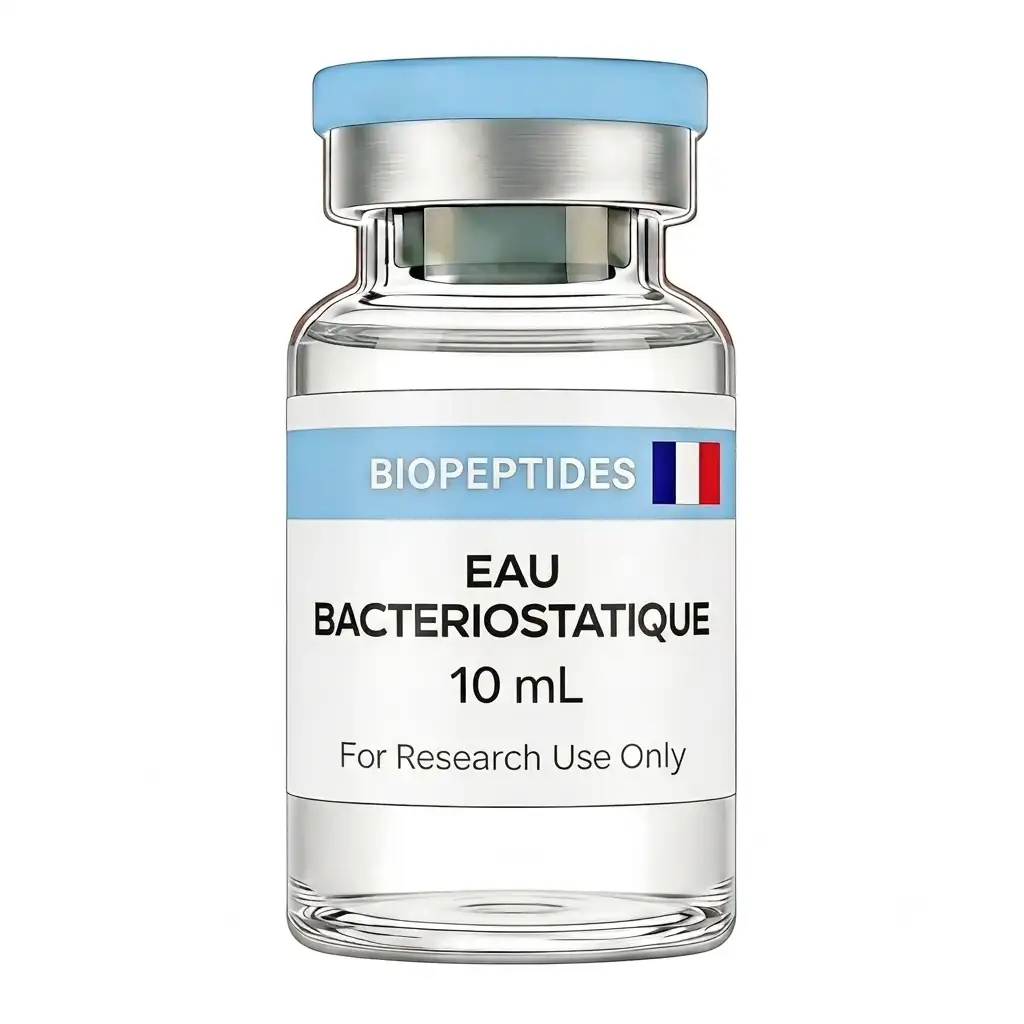
Bacteriostatic water
Sterile USP solvent (0.9% benzyl alcohol) for reconstituting lyophilisates.